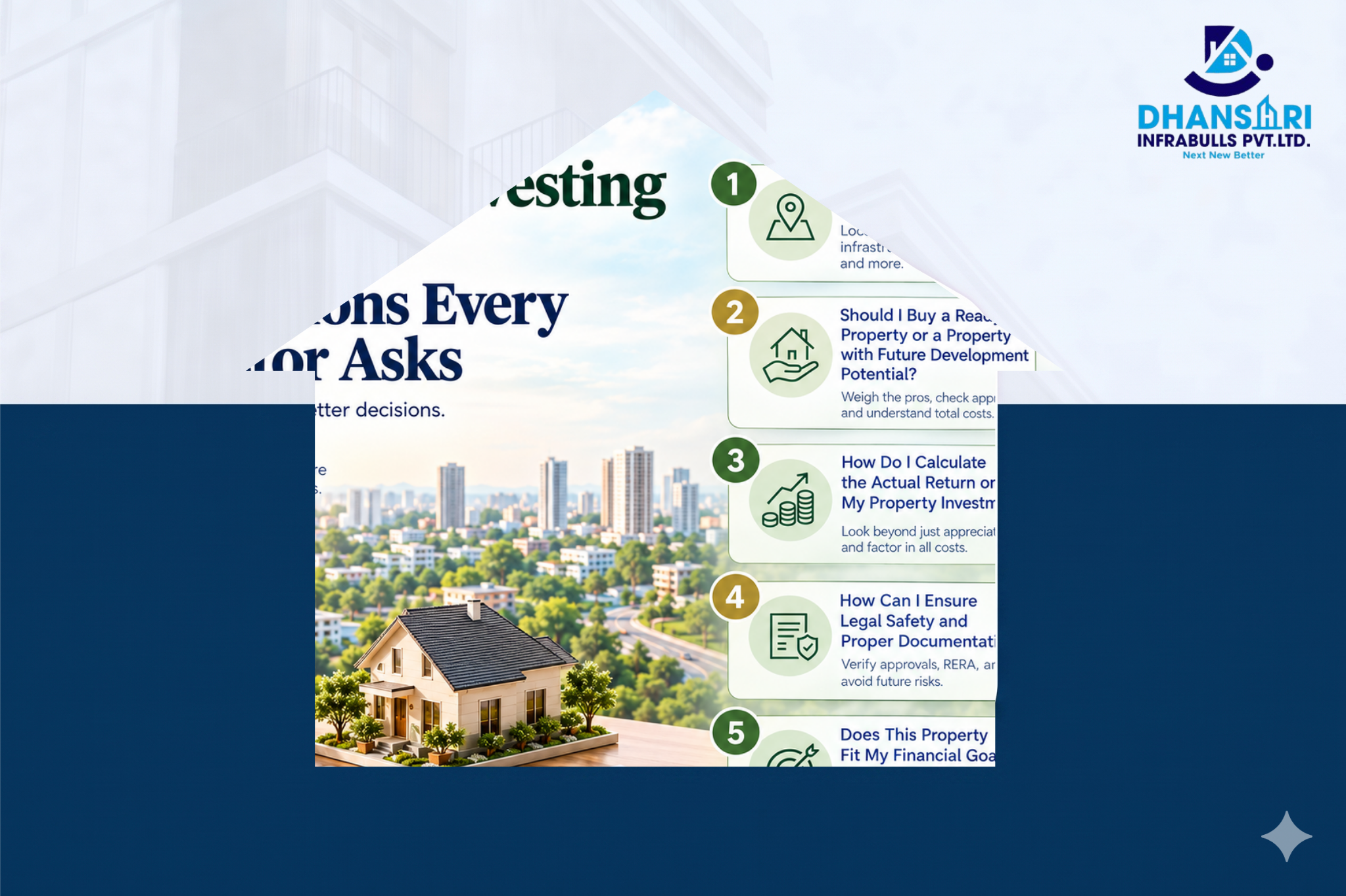
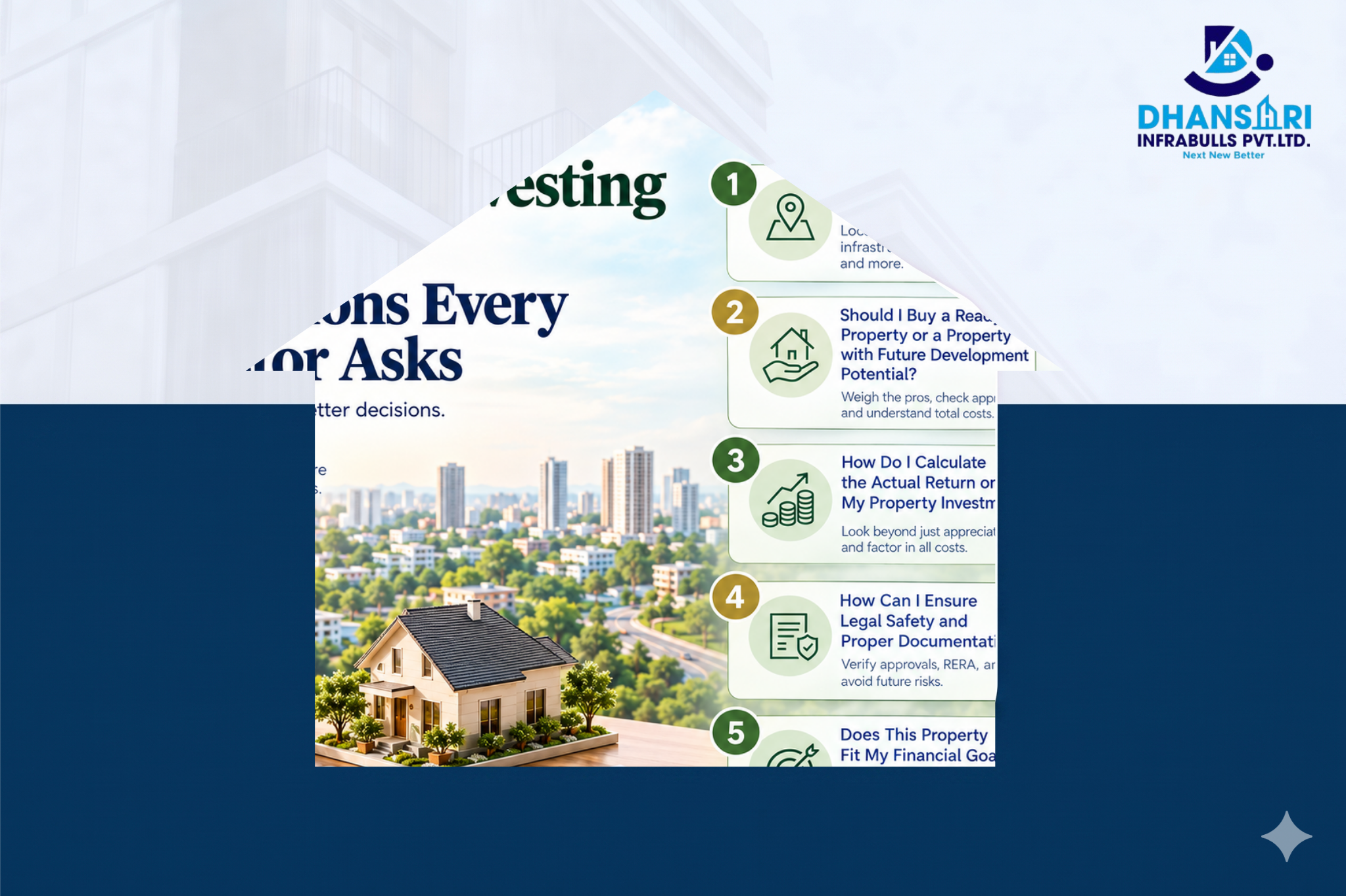
Real Estate Investing in 2026: 5 Questions Every Investor Asks
Real Estate Investing in 2026: 5 Questions Every Investor Asks
Real estate investment continues to be an important option for people looking to build long-term wealth. But in 2026, property investors are becoming more thoughtful about where and how they invest.
Buying a property is not just about finding a good-looking project or hearing that prices may increase in the future. A smart real estate investment requires research, proper documentation, location analysis, and a clear understanding of your financial goals.
Whether you are considering a residential property, plot, apartment, or commercial property, asking the right questions before investing can help you make a more informed decision.
Here are five important questions every real estate investor should ask before buying property in 2026.
1. Where Should I Invest in 2026?
When it comes to property investment, location is one of the most important factors to consider.
But choosing a location only because property prices are increasing is not enough. Investors should look at what is happening around the location and how the area is developing.
For example, improving roads, better connectivity, new residential projects, educational institutions, healthcare facilities, commercial development, and employment opportunities can all influence future housing demand.
For investors considering property investment in Indore and surrounding growth corridors, areas such as Rau and other developing parts of the city may attract attention because of their connectivity and expanding development.
However, every project should be evaluated individually rather than assuming that every property in a developing area will perform in the same way.
Before investing, consider:
- Connectivity with major roads and important parts of the city
- Existing and upcoming infrastructure
- Residential and commercial development
- Rental demand
- Availability of daily-use facilities
- Resale potential
- Current property prices compared with nearby areas
A location may have future potential, but the quality, legality, accessibility, and pricing of the individual project are equally important.
2. Should I Buy a Ready Property or a Property with Future Development Potential?
The next question is about the type of property you want to invest in.
Should you purchase a ready-to-move property, or should you consider an under-development or plotted project with a longer investment horizon?
Ready-to-Move Properties
A ready property allows you to physically see what you are purchasing.
Some potential advantages include:
- Immediate possession
- Possibility of starting rental income sooner
- Ability to inspect the actual property
- Better understanding of the surrounding neighborhood
- Fewer construction-related uncertainties
However, ready properties may have a higher entry price depending on the location, property condition, and demand.
Developing or Plotted Projects
Some investors prefer entering a developing location at an earlier stage, particularly when they have a long-term investment horizon.
Plotted developments can be attractive to buyers who want flexibility in future construction or prefer investing in land rather than a ready-built structure.
At the same time, investors should carefully verify the project's approvals, documentation, developer credentials, development plans, connectivity, and applicable RERA registration details.
Don't look at the purchase price alone.
Consider the complete investment:
Property Price + Registration & Other Costs + Development/Construction Costs + Holding Costs = Total Investment
Understanding the complete cost gives you a more realistic picture of the investment.
3. How Do I Calculate the Actual Return on My Property Investment?
One of the biggest mistakes investors make is looking only at the expected property appreciation.
Suppose a property is expected to generate ₹25,000 in monthly rent. That doesn't necessarily mean ₹25,000 is your actual monthly profit.
Depending on the property, you may have expenses